
I was never the girl who hid behind books. I was the girl who lived inside them, folded between their pages, breathing in ink like oxygen. I marched out of them with wild eyes and stubborn hope, writing my name in the margins like I was rewriting the rules, one story at a time.
They called me a baby genius. I spoke early, crawled too soon, walked before anyone expected me to. Then came the classroom where I became the first to speak, the first to dare, the one who raised her hand too much and asked too many questions. In a world where girls were taught to shrink before they bloomed, I bloomed anyway. I walked like I was allowed. Like the world belonged to me, too. I wasn’t waiting to be rescued. I wasn’t even looking for escape. I was looking for mirrors, proof that I wasn’t alone in my bigness, in my fire, in my refusal to fold myself into something smaller just to make others comfortable.
Books didn’t save me. They recognized me.
I remember reading The Joys of Motherhood by Buchi Emecheta and feeling the weight of it settle in my chest. I was just old enough to grasp the warning tucked between its pages that I did not want to become Nnu Ego. The pain of her sacrifices. Her invisibility. The slow, quiet unraveling of a woman who gave everything and still ended up with nothing. That story didn’t just introduce me to womanhood, it cautioned me. It told me what could happen if I wasn’t careful. And even then, I knew: I wanted more. I would not die in service of a life that didn’t let me live.
Then came A Lemon Tree Grows, and something cracked wide open. I began to understand the ache of existing in-between, between who you are and who the world needs you to be. Between duty and desire. That’s when stories shifted for me. They stopped being an escape. They became scripture. Survival guides. Soft rebellions for girls like me, the dreamers, the disobedient, the daughters who refused to stay small. I read with a hunger that unsettled adults. While my peers recited lyrics, I was quoting Maya Angelou, letting her words teach me about dignity, rage, and rising. I carried Rupi Kaur’s Milk and Honey in my school bag like a pocket mirror, small, sharp, and devastatingly honest. Her poetry lit up the dark corners inside me, the ones I hadn’t found words for yet. The quiet shame. The soft sadness. The inherited silences. Her verses whispered: you don’t have to carry this alone.
I wasn’t shy. I was outspoken, daring, sharp, and unafraid of my own brilliance. The first daughter, which in an African household meant second mother by default. I was the girl they all pointed to and said, “She’s going places,” long before I even knew where places were or what greatness was supposed to look like. But life doesn’t reward fire without testing its flame. When I lost two people who had been a good part of my life, one after the other, it felt like the world cracked open beneath my feet. It wasn’t just the people I had lost, it was the life I thought I knew, the certainty that had held me together. My confidence didn’t vanish, but it quieted, like a flame that flickers when the wind blows too hard. Grief didn’t come as loud tears or gut-wrenching screams.
For the first time ever it arrived in stillness, a hollow silence that swallowed me whole. My body moved through the motions of life, but my soul stayed behind, stuck in a place I couldn’t reach. I laughed in snapchat groups, pretending everything was fine. I posted selfies, got my glam on, wearing my favorite outfits, giving the world the illusion that nothing had changed. But inside, I was adrift. The anxiety became my constant companion. It clung to me like a second skin, a weight that never lifted. I began questioning everything: Was I too loud? Too soft? Too selfish for wanting to write when the world was expecting me to grieve? Too broken to keep moving forward? That’s when writing stopped being just a hobby and transformed into something essential. It became the only place where I could make sense of the chaos inside me. A place where I could still feel connected to myself, even when the rest of the world seemed so far away. I stopped reading, well not entirely. It became hard to focus on anyone else’s words when my own were screaming too loud to hear theirs. I couldn’t fully immerse myself in someone else’s story because mine needed all my attention. My thoughts and emotions were so overwhelming that I couldn’t drown them out with the noise of others. I was too busy stitching myself back together, piece by piece, on the page.
So, i wrote. Not with grace, but with grit. My words spilled out in messy entries, half-formed thoughts that were barely sentences but somehow felt like lifelines. There were ranting voice notes, unsent and often unlistenable, but they were my way of screaming into the silence. I penned open letters to ghosts, those I had lost and those I had left behind. I crafted half-formed essays, pieces of a puzzle I wasn’t sure I was capable of solving, but desperately needed to try. It wasn’t pretty. It wasn’t polished. But it was my survival journaling.
That’s how Samira Writes (@1samirawrites), my Substack, was born. Not out of ambition, not out of some desire for recognition, but out of necessity. My soul had no other outlet. I needed a space to make sense of the chaos, to untangle the emotions I couldn’t name, to give shape to the grief that had left me lost. It wasn’t about crafting a brand or a platform; it was about finding my voice in the middle of all the noise, about creating a space where I could breathe again. There, in the rawness of my writing, my healing began to find structure. It wasn’t neat or linear, but it was real. I wrote essays that dug deep into womanhood, into grief, into what it meant to carry northern identity in a world that never quite understood it.
I explored the tangled mess of expectation, what I thought I was supposed to be, and what I was learning I didn’t have to be. I wrote what I once kept quiet, what I tucked away because it felt too messy or too painful to share. I wrote about what I wish someone had said to me at fifteen, when I was still trying to figure out who I was, and how I could navigate a world that seemed determined to put me in a box. It wasn’t just healing for me, it was healing for the girl who needed to read what I had to say all those years ago.
Some titles say it all:
“A kitchen of my own” where i say; Somewhere between peeling onions the way my mother liked and getting the rice just right, something inside me switched off. Cooking stopped being about curiosity or creativity, it became routine. It became duty.
Or “Who am i beyond the weight of the name of my forefathers” in this i highlight; In my culture, the name you carry is important. It is an anchor, connecting you to your past and your people. And sometimes, that connection feels suffocating. There are moments when I feel like I am defined entirely by the name I carry, the expectations that come with it, the way it shapes how others see me, and how it shapes how I see myself. It’s like wearing a cloak made of history, pride, and duty. Some days, that cloak feels heavy, and I wonder if I can ever step out from underneath it.
“The feminist i’m not sure i want to be” and here i say; “if feminism is about choice, why do I feel judged for choosing things that don’t look “revolutionary”? Why do I have to explain why I don’t want to split bills with a man or why I think being a wife and mother is powerful? I want to work, not to mimic men, but to build and create. Why is that not enough? We talk about “equality,” but do we even know what that means? Does it mean sameness? If so, we’re on the wrong track. A man is not a woman, and a woman is not a man. That’s biology. Culture? Systems? Those are where oppression lies, not biology.”
“Yar Arewa” where i talk about navigating life as a northern Nigerian woman, where i say; To be an Arewa woman is to be a keeper of stories, a bearer of silent battles, a thread in the fabric of tradition that stretches back generations. It is to walk through life adorned in culture yet cloaked in expectations. To smile politely while balancing a thousand unspoken rules. It is to learn early that patience is not just a virtue, but a requirement. A demand. A lifelong performance.
I don’t write to be understood. I write to understand myself. And maybe, by doing so, I leave behind a trail for another girl. Another first daughter. Another northern firebrand who refuses to shrink. Because before grief had a name in my life, literature had already begun shaping my world. My mother once told me, “Yarinya mai harshe mai wuya ce.” A girl with a sharp tongue is a difficult girl. She said it with a half-smile, but it stuck. I was always the girl with the tongue. The questions. The refusal to settle. Northern Nigerian stories aren’t written in ink. They’re folded into millet, whispered while pounding yam, wrapped in the silence between what is said and what is endured.
These stories taught me how to be obedient. How to endure. How to keep secrets. There’s no manual for being the eldest daughter. You just grow up watching your mother cry in the kitchen, and somehow learn to hold your own tears until everyone else is okay. People always say, “You are the firstborn, you’re supposed to lead by example.” It’s like they think you were born knowing how to carry the weight of everyone’s hopes and dreams. But what happens when you’ve lost yourself? When you’re trying to figure out who you are, while everyone else is depending on you to be steady, to be the rock they can lean on? Being the first daughter meant responsibility without recognition, obedience without explanation, and love without softness. You’re taught to be strong, to smile through the pain, to take care of everyone else before yourself. You grow up in a constant state of serving, giving, and sacrificing without ever being asked how you’re doing.
It’s a quiet kind of exhaustion, the kind you don’t know how to talk about because you’re supposed to be okay, always. Reading was how I rebelled. It was the one space where I could lose myself, where the weight of the world didn’t follow me. Books allowed me to be anything other than what everyone else expected. Writing was how I escaped. It was my safe place, the one place where my voice was mine, unshaped by anyone else’s needs or opinions. In between the lines, I found myself again. I found a way to exist without apologizing for it. Through literature, I found other kinds of daughters, flawed, fierce, funny. Women who were allowed to want more. And I realized: I didn’t need to be perfect to lead. I just needed to be honest. And brave.
To write about grief, faith, sadness, and all the ways I’ve been both too much and not enough. That is what i love about the art of literature, and writing. But then came messages: “I needed this today.” “I feel seen.” “Thank you for saying what I couldn’t put into words.” And slowly, the fear gave way to purpose. Because books didn’t save me. They reminded me who I already was. And writing helped me become her again.
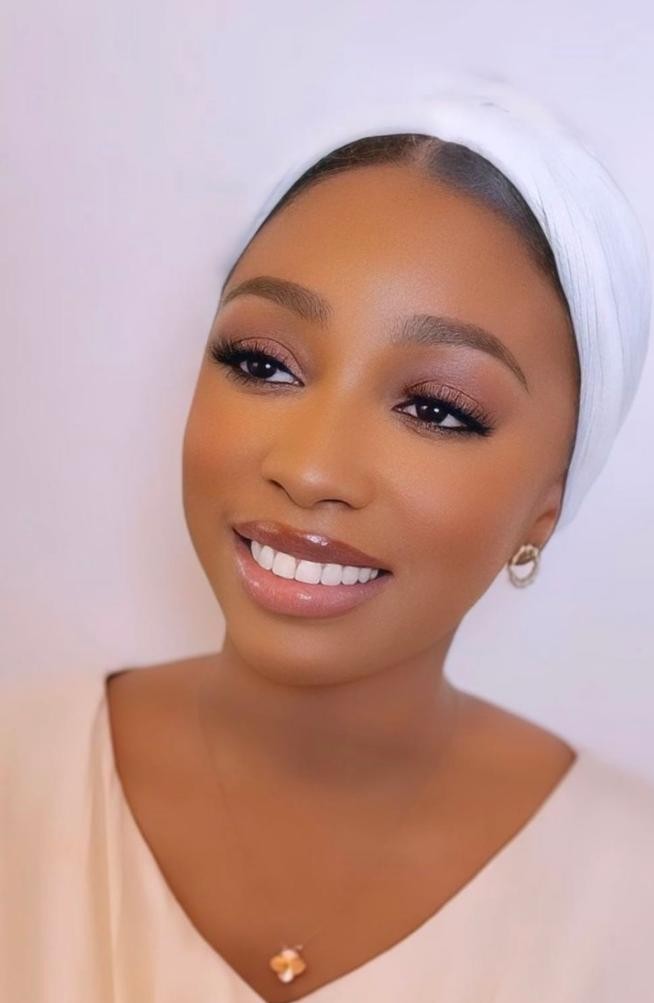
Samira Musa is 23 year old writer from Kagara in Northern Nigeria. Her work is deeply rooted in African culture, particularly the realities of northern Nigerian women. Her work follows a conversational style, sometimes quiet, sometimes loud; mostly about gender, power, and the weight of expectations, especially within politics and cultural traditions that often silence women before they find their voices.
She began writing in 2019, at first as a private refuge, a way to steady herself against the tides of anxiety and depression. What started as an escape became something more of a passion, a craft, a way of making sense of the world.
Twitter & Instagram: is3mira
Samira came in fifth place for her submission to Aida’s Whimsical Reading Party: The Literary Lifeline.
Leave a Reply